How many stocks make a diversified portfolio?
A stock count alone does not tell you how diversified a portfolio is. Weights, shared exposures and behaviour during bad periods matter too.
If you have ever been told to "just buy the index," you have already met one idea about where returns come from. Factor investing is the next idea along: decades of academic research suggest that a handful of measurable characteristics, not individual stock-picking hunches, explain most of the difference in long-run returns between portfolios.
We build around four of the most durable ones.
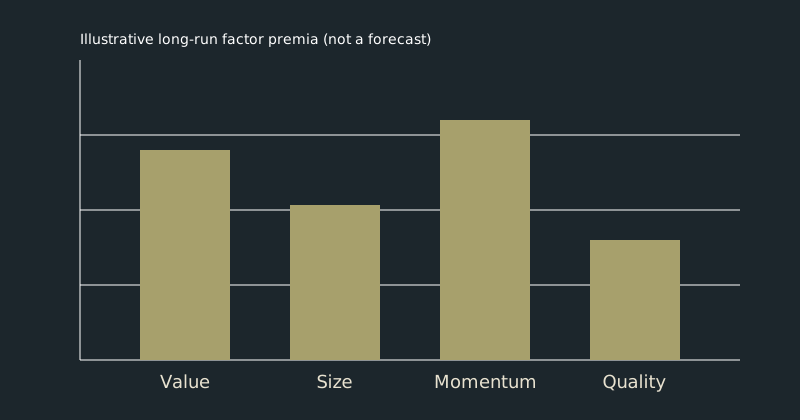
The chart above is illustrative, not a forecast. The point is simply that these premia are persistent enough, across decades and across markets, to build a disciplined process around.
We are not trying to be clever about any single company. We are trying to be systematic about the things that have actually mattered.
Factors can be captured cheaply and transparently with broad, rules-based portfolios. That fits our temperament: less guessing, fewer emotional decisions, and costs kept low so more of the return reaches you. It is also why our Smart Beta strategy is built directly on these ideas.
None of this removes risk. Factors underperform for stretches, sometimes uncomfortably long ones, which is exactly why discipline, diversification, and a long horizon matter more than any single clever call.
More insights

A stock count alone does not tell you how diversified a portfolio is. Weights, shared exposures and behaviour during bad periods matter too.

How to distinguish an attractive backtest from a result that is reproducible, robust and investable after costs.

Volatility is useful, but it does not capture permanent loss, liquidity, inflation or rare events. A smooth chart is not proof of safety.
Stay in touch